Weird Controllers, No Apologies: How American Gamers Learned to Love Japan's Wildest Input Devices

Photo: StockSnap, CC0, via Wikimedia Commons
There's a moment — every fight stick owner knows it — where someone at a gaming gathering spots the thing sitting on your lap and goes, "Wait, you actually play on that?" Not with admiration. With genuine confusion, like you showed up to a road trip with a horse.
For a long time, that reaction was pretty standard in American gaming circles. Arcade sticks, GameCube controllers, taiko drums, maracas, pop'n music buttons — these were curiosities at best, punchlines at worst. But somewhere between the rise of competitive Smash, the explosion of rhythm game content on YouTube, and a new generation of players who grew up watching Japanese arcade footage on repeat, something quietly flipped. The weird controllers aren't weird anymore. They're the point.
The Fight Stick Pipeline Is Very Real
If you spend any time in the fighting game community — and honestly, even if you don't — you've probably noticed that arcade sticks have had a serious cultural glow-up. What used to feel like an intimidating barrier to entry (they're bulky, they're expensive, and the learning curve is genuinely brutal at first) has become almost a rite of passage for anyone getting serious about Street Fighter, Guilty Gear, or Tekken.
Part of that is practical. Japanese arcade culture built fighting games around the lever-and-button layout for decades before those games ever hit home consoles. The muscle memory baked into titles like Street Fighter II assumed you were standing at a cabinet, not hunched over a couch cushion. When American players started digging into frame data and motion inputs more seriously — especially as competitive scenes exploded post-EVO era — the argument for sticks started making a lot more sense.
But it's not purely functional. There's something almost ceremonial about fight sticks now. Custom artwork panels, Sanwa vs. Seimitsu debates, the tactile satisfaction of a clean quarter-circle on a quality gate — it's become its own hobby within the hobby. Companies like Hori and Qanba, both deeply rooted in Japanese arcade hardware culture, are selling to American players who treat their sticks like gear, not gadgets.
The GameCube Controller Is a Cultural Artifact at This Point
Ask any Melee player why they're still using a controller that came out in 2001 and prepare for a fifteen-minute answer. The GameCube controller's persistence isn't nostalgia in the sentimental sense — it's a case study in how a specific piece of hardware becomes so deeply embedded in a game's competitive identity that no modern alternative can fully replace it.
Nintendo tried. Third-party manufacturers tried harder. The community collectively shrugged and kept buying up old stock, refurbishing worn-out controllers, and commissioning custom builds with better components. The controller's unusual analog triggers, the oversized A button, the notched gates — none of this was accidental. It was designed around GameCube-era Nintendo games, and it just so happens to fit Super Smash Bros. Melee like a glove that was made specifically for that hand.
What's interesting is how mainstream this has become. GameCube controllers at tournaments aren't a quirk anymore — they're expected. And that normalization has bled outward. Players who have never touched Melee competitively are picking them up just because the vibe is right, because the controller has accrued enough cultural weight that using one feels like a statement.
Rhythm Games Brought the Peripherals, and Gen Z Showed Up
If fight sticks are the fighting game world's badge of commitment, rhythm game peripherals are something else entirely — they're basically invitations to look absolutely unhinged in public, and people are accepting those invitations enthusiastically.
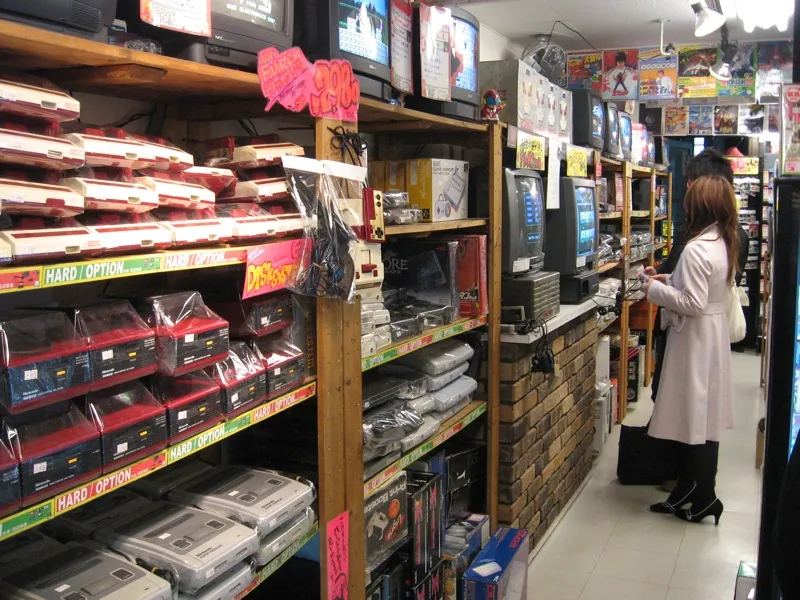
Drum sets for Taiko no Tatsujin. Pop'n Music buttons the size of your head. IIDX turntables. Dance pads. These are not subtle pieces of equipment, and for a long time, owning them in the US meant either importing at significant expense or hunting through specialty retailers. But the combination of games like Beat Saber normalizing motion-based rhythm input, the boom of content creators streaming Japanese rhythm games to massive audiences, and the gradual US availability of titles like Taiko no Tatsujin has pushed peripheral play from obscure to aspirational.
There's a whole corner of gaming content right now that's essentially "watch me play this incredibly niche Japanese rhythm game on hardware you've never heard of" — and it pulls serious numbers. The spectacle is part of the appeal. These aren't games you can just pick up with a standard controller and immediately understand. The hardware is the experience.
Gatekeeping Is Losing the Argument
Here's what's actually changed, underneath all of this: the old gatekeeping logic around "proper" gaming hardware is falling apart, and it's falling apart because the people who would've done the gatekeeping are now the ones buying fight sticks and custom controllers.
The argument used to go something like: real games use real controllers, and anything else is either a gimmick or a crutch. Motion controls were mocked. Arcade sticks were "for people who can't adapt." Specialized peripherals were a waste of money for a niche experience. That argument had a certain cultural momentum for a while — particularly in spaces dominated by the idea that the standard dual-analog gamepad represented the pinnacle of input evolution.
But competitive communities don't care about that framing. They care about what works. And when what works happens to be a Japanese arcade stick or a twenty-year-old Nintendo controller, the "that's weird" response starts to ring hollow pretty fast.
Beyond competition, there's also just the broader shift in how American gamers relate to Japanese gaming culture. Decades of engagement — through anime, through import gaming scenes, through streaming and YouTube rabbit holes — have made the design philosophies behind these controllers feel less alien and more like context worth understanding. The GameCube controller makes sense when you know what it was built for. The fight stick makes sense when you've watched enough high-level play to see how it moves.
Hardware as Identity
Maybe the most interesting thing happening here isn't about performance at all. It's about how gaming hardware has become a way of signaling what kind of player you are and what you care about.
Choosing a fight stick over a pad isn't just a practical decision — it's an alignment. It says something about your relationship to fighting game history, to arcade culture, to the idea of mastery through deliberate practice. Using a GameCube controller in 2025 is almost a philosophical stance. Playing Taiko on an actual drum peripheral instead of a controller is choosing immersion over convenience.
Japanese game designers have always understood that the controller isn't separate from the game — it's part of it. American players are catching up to that idea, one unconventional input device at a time. And honestly? The hobby is better for it.