8-Bit Roots, Modern Fruits: Why Japan's Classic Game Design Is Having Its Biggest Moment Yet

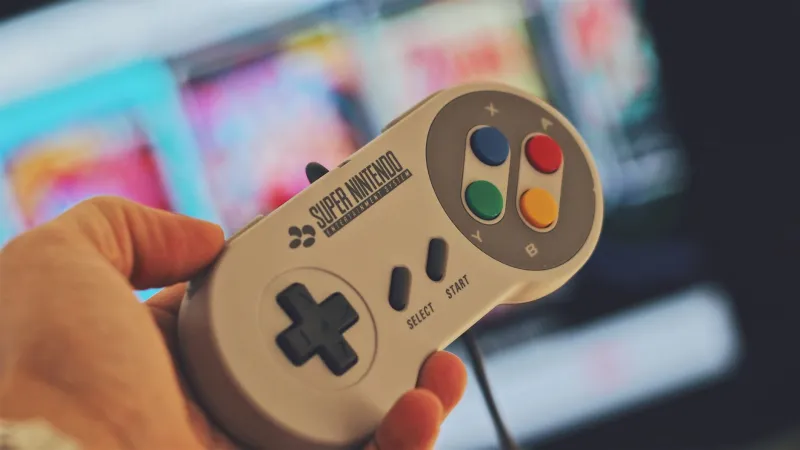
Photo by Photo by Marco J Haenssgen on Unsplash on Unsplash
There's a moment every retro-curious gamer knows. You boot up some sleek new indie title, the chiptune-adjacent soundtrack kicks in, and within about thirty seconds your brain goes: oh, I've felt this before. Not in a déjà vu way — more like muscle memory. Your thumbs know where they're going before your eyes catch up. That's not an accident. That's Japanese game design, alive and working exactly the way it was engineered to, just wearing a fresh coat of paint.
The last few years have seen a full-on explosion of games that consciously borrow from the NES era, the arcade golden age, and the Super Famicom's peak years. And what's fascinating is that this isn't just nostalgia bait for aging millennials. Younger American gamers who never touched a Famicom cart are gravitating toward these titles just as hard. Something deeper is going on here.
What Made Japanese Game Design So Different
To understand why these principles keep coming back, you have to understand what made them special in the first place. Japanese developers in the late '70s through the '90s were working under brutal hardware constraints — tiny memory budgets, limited color palettes, no storage space for lengthy cutscenes or sprawling dialogue trees. What they had instead was an almost obsessive focus on feel.
Nintendo's internal philosophy — sometimes called "game feel" in modern design circles — prioritized the moment-to-moment experience of controlling a character above nearly everything else. Mario's jump arc in Super Mario Bros. was tweaked hundreds of times before launch. Mega Man's slide and charge mechanics were iterated until they felt like extensions of your own hands. Capcom, Konami, Taito, Namco — they were all engaged in a kind of arms race over responsiveness and precision that the Western market simply wasn't running at the same pace.
Arcade culture pushed this even further. When you're asking someone to drop another quarter, you have maybe five seconds to hook them. Japanese arcade developers became masters of instant engagement — tight control loops, clear visual feedback, reward systems that fired fast and often. That philosophy didn't disappear when arcades faded. It just migrated into console game design and eventually became the bedrock of the entire medium.
The Indie Scene Picked Up the Torch
Fast-forward to the mid-2010s, and you start seeing indie developers — many of them American — explicitly citing Japanese classics as their north stars. Shovel Knight from Yacht Club Games is probably the most famous example. The developers didn't just ape the visual style of NES games; they studied the stage design logic of Mega Man, the momentum physics of DuckTales, and the boss encounter pacing of Castlevania. The result was a game that felt like a lost artifact from 1988, except somehow more polished than anything that actually existed in 1988.
More recently, titles like Anger Foot, Neon White, and Pizza Tower have taken the high-speed, score-chasing mentality of Japanese arcade games and filtered it through modern sensibilities. Pizza Tower in particular became a cult hit almost entirely on the strength of its movement mechanics — which are directly descended from Wario Land's momentum-based platforming, itself a Nintendo product from 1994. The lineage is undeniable.
Developers aren't shy about it either. In interviews, the team behind Pizza Tower openly gushed about their Wario Land obsession. The creators of Ultrakill have cited Devil May Cry — itself a Japanese action franchise — as a foundational influence. There's a generational handoff happening in real time, and it's running through Tokyo whether anyone acknowledges it or not.
AAA Studios Are Paying Attention Too
It's not just the indie world. Bigger studios have clocked the appetite for this kind of design and started retrofitting their own pipelines accordingly. Capcom's recent run — Devil May Cry 5, the Resident Evil remakes, Street Fighter 6 — has been defined by a return to mechanical depth and player mastery over cinematic spectacle. These are games that reward you for learning them, not just watching them.
Even outside Japan, the influence is visible. The Metroid series has spawned an entire genre (Metroidvania, obviously), and titles like Hollow Knight and Axiom Verge have carried that torch to massive commercial success in the US market. Hollow Knight alone has sold over three million copies on PC. That's not a niche audience. That's a mainstream one that just happens to love the design logic Nintendo pioneered forty years ago.
And then there's the soulslike genre — FromSoftware's creation — which is arguably the biggest design movement in gaming right now. Elden Ring winning Game of the Year at The Game Awards wasn't just a win for one studio. It was a validation of a design philosophy rooted in punishment, precision, and mastery that traces directly back to arcade-era Japanese thinking. You die, you learn, you adapt. Sound familiar? That's the quarter-muncher philosophy, scaled up to sixty hours.
Why American Gamers Are Hungry for This
So what's driving the appetite on the American side? Part of it is fatigue. A significant chunk of the US gaming audience has grown exhausted by the photorealism arms race — massive open worlds that feel empty, cinematic experiences that play themselves, live-service games that demand your time without respecting it. Against that backdrop, a tight 10-hour platformer with pixel art and a killer soundtrack feels almost radical.
There's also a generational memory angle that's more complex than simple nostalgia. Millennials who grew up with the NES and SNES are now in their 30s and 40s, with disposable income and a real appetite for games that respect their time while still challenging them. But younger Gen Z players are discovering these titles fresh, through YouTube retrospectives, TikTok clips of insane speedruns, and recommendations from streamers. The NES era is becoming mythology — and mythology has a way of drawing people in regardless of whether they lived through it.
The Design Principles That Keep Winning
Strip away the nostalgia factor entirely and you're left with some genuinely timeless design logic. Clear visual communication. Responsive controls. Difficulty that teaches rather than punishes arbitrarily. Reward loops that activate quickly and compound over time. These aren't retro quirks — they're just good game design, and they happen to have been perfected in Japanese studios between 1980 and 1995.
The developers who understand this aren't chasing a trend. They're mining a vein of design wisdom that never went dry. And American players, whether they can articulate it or not, recognize the difference between a game that respects their intelligence and one that's just showing off its graphics card.
Japan built the foundation. The rest of the world is still building on top of it — and honestly? The structure's holding up just fine.