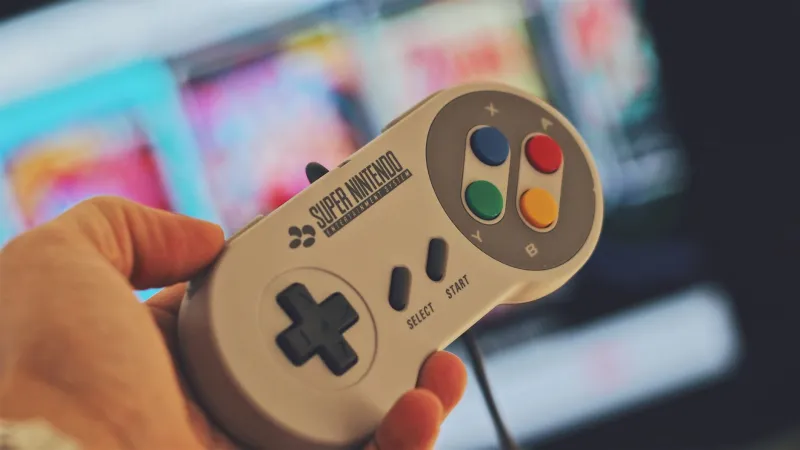
Playing Alone Together: How Western Gamers Are Quietly Rewriting the Rules of Japanese RPG Design
Photo: Harrison Keely, CC BY 4.0, via Wikimedia Commons
There's a specific kind of frustration that JRPG fans know all too well. You boot up a promising new title, sink a few hours into the story, and then — boom — you hit a wall that basically requires you to either find three other humans or grind through content clearly designed for a party of real people. The game doesn't say it out loud, but the message is clear: this wasn't really built for you.
For a long time, that was just the deal. Japanese developers designed with a domestic audience in mind, and Japanese gaming culture has historically been far more comfortable with cooperative and multiplayer-heavy structures. Arcades, local co-op, and online guilds aren't just features over there — they're part of the social fabric of how games get played. Western audiences, especially Americans, never quite signed on to that same philosophy.
But something has shifted. Quietly, steadily, the solo player — that lone wolf sitting on a couch in Ohio or Oregon who just wants a good story and zero obligation to coordinate with strangers — has become one of the most influential forces in how Japanese RPGs get designed.
The Numbers Don't Lie
It's not a vibe. It's data. Western markets, and the US in particular, have become critical revenue sources for Japanese publishers. Titles like Final Fantasy XVI, Persona 5, and Elden Ring didn't just do well in Japan — they exploded in North America and Europe. And when developers start looking at where their money is actually coming from, they start paying very close attention to what those players want.
What those players want, overwhelmingly, is a game they can play by themselves.
Surveys from major gaming research firms consistently show that American players rank single-player campaigns as the most important feature in an RPG purchase decision. Not co-op modes. Not PvP rankings. Not seasonal content. A story they can experience at their own pace, offline if they feel like it, without anyone else involved.
Japanese studios have heard this loud and clear.
The Live-Service Pivot (and the Pivot Back)
For a few years there, it looked like the industry was heading in the opposite direction. Live-service games were the hot thing, and Japanese publishers weren't immune to the hype. We saw titles launch with heavy online requirements, limited offline functionality, and content gating that essentially punished solo players for not participating in multiplayer events.
The market pushed back hard.
Games that launched with aggressive online-first structures in Western markets saw steep drop-offs in player retention. Meanwhile, titles that offered robust offline campaigns — even within otherwise multiplayer-focused frameworks — held onto their audiences. The message was pretty clear: American players will engage with multiplayer if it's optional, but they'll abandon a game entirely if solo play feels like an afterthought.
Developers noticed. Monster Hunter: World is a textbook example of a game that threaded this needle brilliantly — technically a multiplayer experience at its core, but designed so thoughtfully for solo play that millions of American players never touched the co-op features and still logged hundreds of hours. Capcom didn't stumble into that balance by accident.
Developers Are Actually Talking About This
What's notable is that this isn't just happening behind closed doors. Developers are increasingly willing to speak openly about how Western audience feedback shapes their design decisions.
Producers working on major JRPG franchises have discussed in interviews how they now build what they call "solo-first" frameworks — essentially designing the entire single-player experience as a complete, satisfying product before layering any multiplayer elements on top. That's a meaningful philosophical shift from the older model, where multiplayer was often baked into the core loop and solo play was the secondary consideration.
Some studios have gone further, scaling back or outright removing online requirements that previously locked certain content behind multiplayer participation. Others have restructured their seasonal live-service content to ensure that solo players can access the same narrative beats as players who engage with group content — just through a different path.
The Cultural Tension Underneath
None of this is without friction. There's a real cultural negotiation happening here, and it's worth being honest about that.
Japanese gaming culture places genuine value on shared experiences. The idea that a game is something you do with people — whether that's friends in the same room or strangers online — isn't just a design choice. It reflects something deeper about how play functions socially in Japan. When Western preferences push developers toward more isolated, single-player-focused designs, there's an argument that something gets lost in translation.
Some Japanese developers and critics have pushed back on what they see as an over-correction. The concern isn't unfounded — a few beloved franchises have stripped out multiplayer components that were genuinely beloved by their core Japanese fanbase, seemingly in response to Western market research. That's a real cost.
But the counterargument is equally compelling. If solo-focused design opens up a franchise to millions of players who would otherwise bounce off the game entirely, isn't that a net positive? More players experiencing a story, a world, a set of characters — even if they're experiencing it alone — seems like a reasonable trade.
What This Means Going Forward
The trend isn't slowing down. As Western markets continue to represent a growing share of revenue for Japanese publishers, the influence of American player preferences is only going to increase. We're already seeing it in announced titles and developer roadmaps — more emphasis on offline modes, more robust single-player campaigns in games that would have previously been multiplayer-only, and a general softening of the "you need other people" design philosophy.
For solo players, this is genuinely good news. The era of booting up a promising JRPG only to realize it's essentially inaccessible without a dedicated friend group is quietly fading. Games are being built with you in mind from the start, not as an afterthought.
For the broader culture of gaming, it's more complicated. The best outcome isn't a world where multiplayer gets designed out of Japanese RPGs entirely — it's one where both modes of play are treated as equally valid, equally supported, and equally fun. Some developers are already figuring that out.
The solo player didn't set out to reshape an entire industry. They just kept buying the games that let them play alone — and eventually, the industry started paying attention.