No Budget, No Problem: Why Japan's Indie Game Scene Is Outclassing the Blockbusters
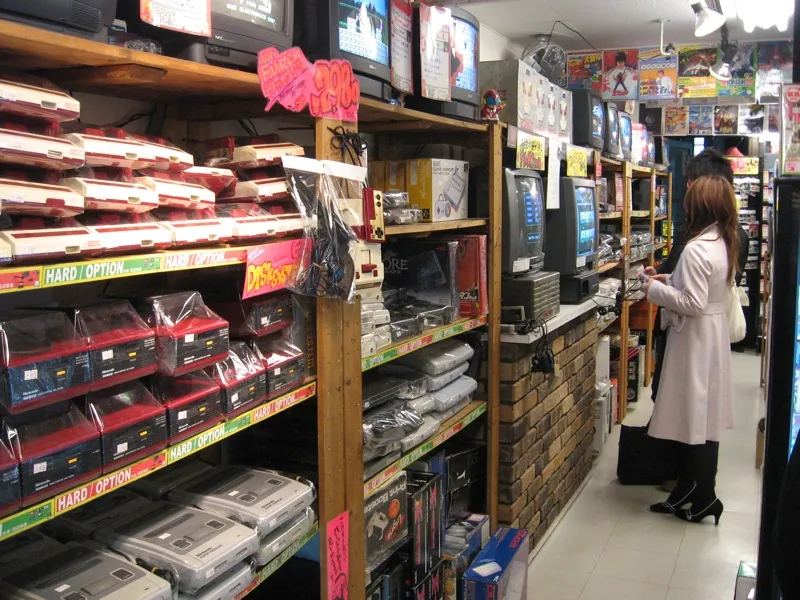
Photo: Fuad Kamal from USA, CC BY-SA 2.0, via Wikimedia Commons
Let's be real for a second. When was the last time a $70 AAA release actually surprised you? Not in the "cool set piece" way, but in the what is this and why can't I stop playing it way? For a lot of American gamers, that feeling has been coming less and less from the big studios — and more and more from small Japanese teams operating out of cramped apartments and shared office spaces, shipping games that feel like they were made by people who genuinely love what they do.
Japan's indie scene has been building momentum for years, but right now it feels like something has cracked wide open. Games like Touhou Luna Nights, Hylics 2 (okay, that one's American, but you get the vibe), Dohna Dohna, and the breakout success of titles developed in RPG Maker and Wolfram have found massive, dedicated fanbases in the US. And the reasons why are worth digging into.
When "Small" Becomes a Superpower
Here's the thing about not having a massive budget: you can't afford to be safe. A 200-person studio with a $80 million development cost needs to appeal to the broadest possible audience. A three-person team in Osaka making a bullet hell RPG hybrid with hand-drawn cutscenes and a story about grief and memory? They just need to make something they believe in.
That creative freedom is showing up in the finished products in ways that are genuinely hard to fake. Japanese indie games have a reputation — earned, honestly — for committing hard to a specific vision. Whether it's the oppressive atmosphere of Yume Nikki and its sprawling fan-made successors, the mechanical depth of doujin fighting games that still get played at EVO, or the pixel art precision of something like Ender Lilies, these games don't hedge their bets. They plant a flag and dare you to follow them.
American players, increasingly burned out on open-world checklists and battle pass fatigue, are following in huge numbers.
The Comiket Pipeline and Why It Matters
One thing that doesn't get talked about enough in Western gaming coverage is the role Japan's doujin culture plays in feeding the indie pipeline. Comiket — the massive twice-yearly fan convention in Tokyo — has been a launchpad for self-published games for decades. Developers sell physical copies of their games directly to fans, get immediate feedback, build communities, and iterate. It's a whole ecosystem that operates almost entirely outside the traditional publishing model.
That culture produces developers who are used to making things on their own terms, distributing directly, and treating their audience like collaborators rather than consumers. When those same developers eventually land on Steam or itch.io, they bring that philosophy with them. And US players, who have spent years watching corporations fumble community management, tend to respond really well to creators who feel genuinely accessible.
The success of games like Touhou — a franchise that started as a one-man doujin project and now has hundreds of fan-made spin-offs, anime, manga, and merchandise — is probably the clearest example of what this pipeline can produce at scale. But it's not an outlier. It's a model.
Weird on Purpose
If there's one word that keeps coming up when American fans talk about why they love Japanese indie games, it's weird. Not weird as a pejorative — weird as a compliment. Weird as in: this game does not care about your expectations, and that's exactly why it's great.
Take Noita, developed by a Finnish studio but deeply influenced by Japanese game design philosophies around systemic depth and player discovery. Or look at the cult following around games like Elona, a roguelike so dense and strange that entire wikis barely scratch the surface. These games aren't weird by accident. They're weird because the developers had a specific, idiosyncratic vision and saw no reason to sand the edges off.
For a US audience that grew up on games that tutorialized everything and held your hand through every mechanic, encountering something that just throws you in and trusts you to figure it out is genuinely refreshing. Sometimes even a little intimidating. But the reward on the other side — that feeling of actually mastering something that didn't make it easy — is hard to replicate.
The Steam Effect and Breaking Through
Steam changed everything for Japanese indie developers trying to reach Western audiences. Before digital storefronts leveled the playing field, the barrier to getting a Japanese indie game in front of American players was enormous. Physical distribution was expensive, localization was a gamble, and marketing budgets were nonexistent.
Now, a small team can release on Steam, get picked up by a YouTuber or streamer with a niche but passionate audience, and wake up the next morning with thousands of wishlists. The algorithm rewards engagement, and Japanese indie games — with their distinctive art styles, unusual mechanics, and deeply committed fanbases — tend to generate a lot of it.
Localization has also gotten dramatically more accessible. Fan translation communities have been doing this work for decades, but now there are professional localization studios that specialize in indie projects, and crowdfunding has made it possible to gauge Western interest before committing. The result is a faster, more fluid pipeline from Japanese developer to American player than has ever existed before.
What the Big Studios Still Don't Get
Here's the uncomfortable truth that the major publishers probably don't want to sit with: the reason Japanese indie games are resonating so hard with American players isn't just about novelty. It's about sincerity.
When you play a game made by a small team that poured years of their life into it, you can feel it. The rough edges, the specific obsessions, the mechanics that exist because someone thought they were cool rather than because a focus group approved them — all of that adds up to an experience that feels human in a way that a lot of AAA games simply don't anymore.
American gamers aren't abandoning big-budget titles entirely. But they're increasingly treating indie games — and Japanese indie games specifically — as the place where they actually find the experiences they'll be talking about five years from now. The games that stick.
The blockbusters get the launch week discourse. The weird little games from Osaka and Tokyo and Fukuoka get the tattoos.
Where It Goes From Here
The momentum isn't slowing down. If anything, the growing visibility of Japanese indie games in Western gaming media, the expansion of dedicated storefronts, and the rise of content creators who specifically spotlight niche titles are all accelerating things. Developers who might have previously stayed entirely within Japan's domestic market are now building with a global audience in mind from day one.
For American players, that means the pipeline of strange, beautiful, mechanically ambitious games is only going to get wider. And for the big studios watching their cultural relevance slowly migrate toward smaller teams with bigger ideas? Well. Maybe it's time to let some of that weirdness back in.