Slow Down and Smell the Pixel Flowers: How Cozy Games Became America's New Gaming Obsession
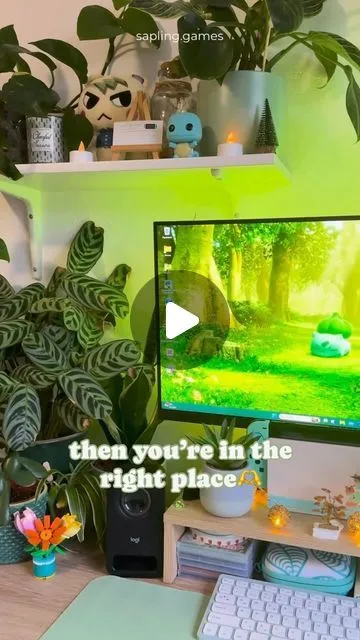
Photo: cozy gaming setup with plants warm lighting Nintendo Switch, via i.pinimg.com
There's something almost rebellious about loading up a farming sim after a brutal day at work. No respawn timers. No ranked anxiety. Just you, a watering can, and a turnip that really needs attention. It sounds simple — almost embarrassingly so — but this is exactly what millions of American gamers are choosing over the latest blockbuster shooter. The cozy gaming movement isn't a passing fad. In 2024, it's a full-on cultural phenomenon, and honestly? It makes a lot of sense.
What Even Is 'Cozy Gaming'?
If you're new to the term, cozy gaming refers to a broad category of games designed around low-stakes, feel-good gameplay loops. Think farming sims, life simulators, puzzle games, and creature-collecting titles. The goal isn't domination — it's vibe. Games like Stardew Valley, Animal Crossing: New Horizons, Spiritfarer, and Coral Island sit comfortably in this space. More recent entries like Fields of Mistria and Rusty's Retirement have kept the momentum going strong into 2024.
What unites them all is a design philosophy rooted in comfort, creativity, and personal pace. You set the rhythm. Nobody's screaming in your headset.
The Japanese Blueprint
Here's the thing cozy gaming fans might not always clock: this genre owes a massive debt to Japanese game design. Harvest Moon (now Story of Seasons), developed by Amccus and later Marvelous, essentially invented the farming sim template back in 1996. Animal Crossing, Nintendo's beloved life sim franchise, perfected the idea of a game that respects your time rather than demanding all of it.
Japanese developers have long understood the appeal of what you might call "everyday magic" — the idea that mundane tasks become meaningful when wrapped in charming aesthetics and gentle progression systems. That philosophy traveled across the Pacific and landed hard with Western audiences who were, frankly, exhausted.
"There's a reason games like Harvest Moon built such devoted fanbases in the US even in the early 2000s," says indie developer Megan Thee (not her real name — she asked to stay anonymous), who is currently building a cozy mystery-farming hybrid. "People were always hungry for this. The market just didn't know how to serve it at scale yet."
Stardew Valley Changed Everything
If there's a single turning point in cozy gaming's mainstream explosion, it's Stardew Valley. Released in 2016 by solo developer ConcernedApe (Eric Barone), the game sold over 20 million copies worldwide and essentially proved that there was a massive, underserved audience desperate for chill gameplay. Barone has cited Harvest Moon as his primary inspiration — a direct line from Japanese design philosophy to a breakout Western indie hit.
The timing wasn't accidental either. Stardew Valley arrived during a period when AAA gaming was becoming increasingly demanding — longer grind loops, always-online requirements, battle passes, loot boxes. Players were burning out. Stardew offered an exit ramp.
"I genuinely think Stardew saved my relationship with gaming," says Marcus, a 28-year-old from Columbus, Ohio, who posts occasionally in cozy gaming Reddit communities. "I was about to quit entirely. Now I play every night before bed. It's basically my therapy."
He's not alone. A 2023 survey by the Entertainment Software Association found that stress relief ranked among the top reasons Americans play video games — and that number has only climbed since.
Animal Crossing and the Pandemic Effect
Animal Crossing: New Horizons dropped in March 2020. You know what else happened in March 2020. The game became a genuine social lifeline during lockdowns, moving over 43 million copies globally. For many Americans, it was their first real exposure to the cozy gaming genre — and it stuck.
The cultural footprint was enormous. Politicians held in-game campaign events. Couples celebrated anniversaries on their islands. Graduation ceremonies happened in New Horizons because the real world wasn't available. The game didn't just sell well; it demonstrated that games could function as emotional infrastructure.
Indie Developers Are Running With It
The success of these titles cracked open the market for a flood of indie developers who grew up on Japanese life sims and wanted to put their own spin on the formula. Coral Island by Stairway Games brought Southeast Asian cultural aesthetics into the mix. Palia attempted a cozy MMO. Haunted Chocolatier, ConcernedApe's still-in-development follow-up, has the internet in a constant state of anticipation.
Smaller studios are also experimenting with genre blends — cozy horror, cozy mystery, cozy RPG. The aesthetic is flexible enough to accommodate a lot of creative directions, which is part of why the space feels so alive right now.
"The barrier to making a cozy game is relatively low in terms of scope, but the emotional design bar is actually really high," says one developer who recently launched a cozy puzzle title on Steam. "You have to make players feel safe and engaged simultaneously. That's harder than it sounds."
Why US Gamers Are Here for It
American gaming culture has historically skewed toward competition and spectacle. The FPS genre, sports games, massive open-world action titles — these have dominated the conversation for decades. So what shifted?
A few things, probably all at once. Mental health awareness has grown significantly, and younger gamers especially are more vocal about prioritizing wellbeing over performance. The pandemic accelerated burnout across every demographic. And social media — particularly TikTok and YouTube — has made cozy gaming incredibly visible, with "cozy game night" content racking up millions of views.
There's also the accessibility angle. Cozy games typically run on modest hardware, including the Nintendo Switch and mid-range PCs. They're cheaper than AAA titles. They don't require hundreds of hours to feel complete. For a generation dealing with economic pressure and time scarcity, that's genuinely appealing.
The Genre Isn't Going Anywhere
Steam's cozy game tag has exploded in the past two years. Major publishers are paying attention — even traditionally action-focused studios are dipping their toes in. The cozy gaming community on Discord, Reddit, and TikTok is enormous and deeply passionate.
What started as a niche preference — something players almost apologized for enjoying — has become a legitimate pillar of gaming culture. And at its core, it's a philosophy that Japanese developers have been championing for decades: games don't have to be hard to be meaningful. Sometimes the most powerful thing a game can do is just let you breathe.
So yeah. Go water your crops. You've earned it.