Vinyl for Weebs: Inside the Obsessive World of Anime OST Collectors Who Spend Thousands on Music They Can't Even Play
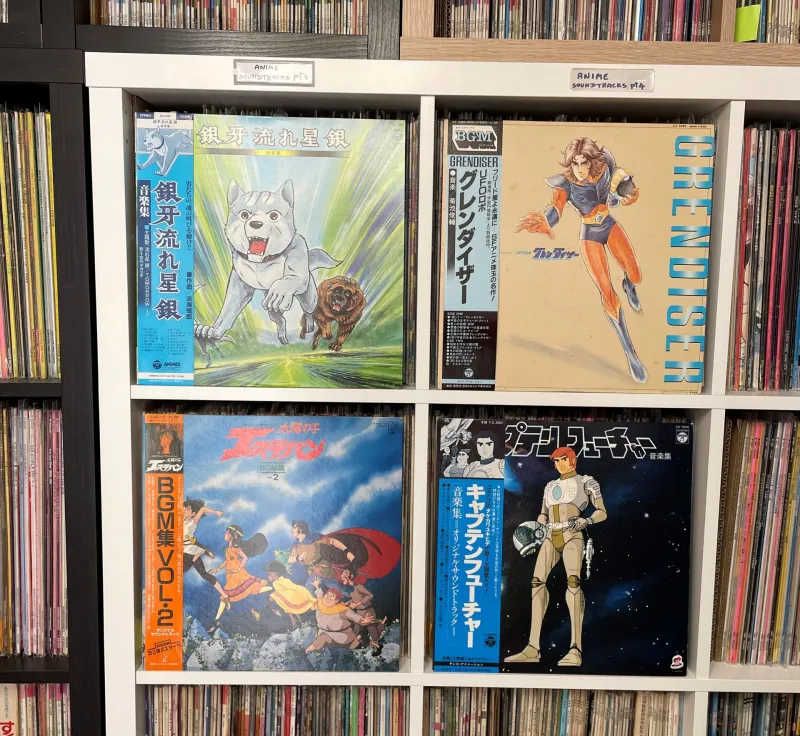
Photo: anime vinyl record collection shelf Japanese music, via magbtm.com
Somewhere in a studio apartment in Columbus, Ohio, there's a shelf holding $2,400 worth of Japanese CD box sets. The owner — a 28-year-old graphic designer named Marcus — doesn't own a CD player. He hasn't owned one in years. But the Neon Genesis Evangelion 25th anniversary soundtrack collection sitting between his Rei Ayanami figure and a framed Cowboy Bebop print? Non-negotiable.
"I could rip them," he admits, "but that's not the point. The point is that they exist, and they're mine."
Marcus isn't an outlier. Across the US, a passionate and surprisingly deep-pocketed community of anime fans is fueling a booming secondary market for anime original soundtracks — vinyl pressings, limited CD editions, and premium box sets that routinely sell for hundreds of dollars on eBay and Yahoo Japan Auctions. The numbers are wild. A first-press Spirited Away soundtrack on vinyl can fetch $300 on a slow day. A complete Macross music collection? Don't even ask.
So what's actually going on here? Why are American fans spending rent money on music they can stream for $10 a month?
The Object Is the Point
To understand anime OST collecting, you have to understand that this was never really about the music — or at least, not only about the music. It's about owning a physical piece of something that meant something to you.
Anime soundtracks occupy a weirdly specific emotional real estate in the brains of Western fans. These aren't just background scores. Yoko Kanno's Cowboy Bebop jazz. Joe Hisaishi's sweeping Studio Ghibli orchestrations. Yuki Kajiura's hauntingly layered compositions for Madoka Magica. This music is architecturally connected to the feelings those shows produced — and for a generation of American fans who discovered anime during formative years, that connection runs deep.
"There's something about holding the physical thing," says Priya, a 31-year-old teacher in Austin who estimates she's spent close to $3,000 on anime soundtracks over the past four years. "When I have the Haruhi Suzumiya soundtrack CDs on my shelf, it's like having a piece of 2007 me. Streaming just doesn't do that."
This is the serotonin economy in action — not buying function, but buying feeling. And the anime industry, both official and unofficial, has figured out how to price that feeling accordingly.
The Import Hustle Is Real
Here's the thing about anime soundtracks: most of them were never officially released in the United States. They're Japanese domestic products, sold through Japanese retailers, pressed in limited quantities that were never designed to account for a global fanbase hungry for physical media.
That means American collectors are almost always operating in the import market, which comes with its own ecosystem of middlemen, forwarding services, and specialized retailers. Sites like CDJapan, Yesasia, and Buyee have built real businesses serving Western fans who want Japanese physical media. The markups are significant — import fees, shipping costs, and currency exchange can add 30 to 50 percent to the base price before you've even factored in secondary market premiums.
And then there's the rarity factor. When labels like Aniplex or King Records do limited pressings for anniversaries or special events, those runs can sell out in hours. The secondary market prices that follow are... educational. A sealed copy of the Evangelion: 3.0+1.0 premium soundtrack set was going for over $180 on eBay within weeks of its Japanese release, despite being available at retail for roughly $60.
Collectors who missed the window don't just shrug and stream it. They pay the markup. Every time.
Social Media Turned This Into a Flex
You can't talk about the OST collector boom without talking about Instagram, TikTok, and the very specific genre of content that's emerged around shelf aesthetics and unboxing culture.
Anime shelf posts are their own micro-genre at this point. A carefully lit photo of a Violet Evergarden vinyl beside a matching figure and some mood lighting can pull thousands of likes. The OST becomes part of a larger visual statement — a curated expression of taste and dedication that's inherently social.
"I definitely bought a few things because I saw them on someone's shelf and thought they looked incredible," admits Derek, a 24-year-old in Seattle who runs a modest anime merch account. "Is that pure? Probably not. Do I regret the Demon Slayer vinyl? Absolutely not."
This social dimension has created a feedback loop that's actively inflating the market. Rare items get photographed, go viral in niche communities, and suddenly everyone wants one. Sellers notice. Prices adjust. The cycle continues.
Streaming Is Complicated Here
You'd think that Spotify, Apple Music, and YouTube would be killing this market. In some ways, they've actually supercharged it.
The logic sounds counterintuitive, but bear with it: streaming platforms have made anime music more accessible than ever to casual listeners, which has dramatically expanded the audience. Someone who discovers Attack on Titan through Netflix can immediately go down a Hiroyuki Sawano rabbit hole on Spotify. Some percentage of those listeners become obsessed. Some percentage of those listeners decide they want to own something physical.
The pipeline from casual streamer to serious collector has never been shorter or faster.
That said, the streaming situation for anime music is genuinely messy. Licensing gaps mean that plenty of iconic soundtracks — especially older titles — aren't fully available on Western platforms. Try finding a complete, properly licensed Escaflowne or Slayers soundtrack on Spotify. You'll have a bad time. For fans who want the full experience, physical media isn't just nostalgia — it's sometimes the only complete option.
Labels Are Finally Paying Attention
The Western market has been hard to ignore for long enough that some labels are starting to respond. Iam8bit, the Los Angeles-based publisher known for premium video game vinyl releases, has expanded into anime territory with licensed pressings that sell out quickly and hold their value well. Mondo has dipped its toes in similarly.
These domestic releases are significant because they lower the barrier — no import fees, no forwarding services, no customs anxiety. When an Akira or Princess Mononoke vinyl drops through a US retailer, the collector community notices immediately.
But the supply still can't match the demand, which is partly why prices stay high and why dedicated collectors are still navigating Yahoo Japan Auctions at 2 AM with a browser extension and a prayer.
The Part Nobody Talks About
Here's the honest part of this whole story: a lot of these collectors will tell you, if you press them, that the music itself is almost secondary to the ritual of acquiring and owning it. The hunt. The unboxing. The placement on the shelf. The photograph.
That's not a criticism — it's just what collecting actually is, across every category from baseball cards to sneakers to first-edition novels. The object becomes a vessel for meaning that transcends its practical function.
For anime fans in the US, who grew up with a hobby that was often dismissed or misunderstood by mainstream culture, building a physical library of the music that shaped them is something close to an act of identity. It says: this mattered, it still matters, and here's the proof.
Marcus, back in Columbus, sums it up while gesturing at his shelf. "I know I can stream all of this. I know it's kind of absurd. But when I look at it, I feel like myself."
Honestly? That tracks.