Lost in Translation: Why Hollywood Keeps Swinging and Missing on Anime
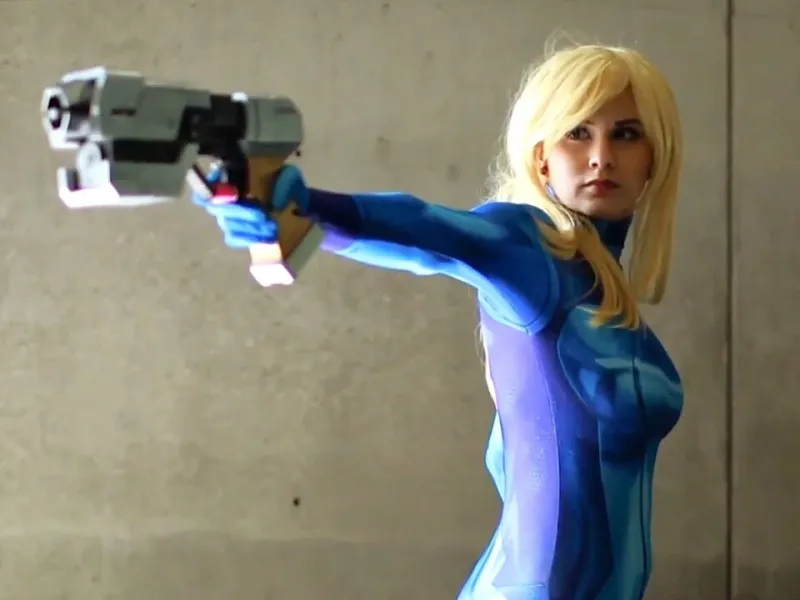
Photo: Robert Elliott of WikiU Film School, CC BY-SA 3.0, via Wikimedia Commons
Let's be real for a second. Every time a major streaming platform announces a new anime adaptation or an "anime-inspired" original series, there's a familiar ritual that plays out across social media. Fans get cautiously excited. Trailers drop. The comment sections fill up with either guarded optimism or full-on dread. And then, more often than not, the finished product lands with a thud that echoes all the way back to the drawing board.
It's not for lack of trying or lack of money. Netflix alone has greenlit dozens of projects in this space — from the Cowboy Bebop live-action disaster to the surprisingly decent Arcane (yes, we know it's based on League of Legends, but the anime DNA is undeniable). Amazon threw its weight behind Blade Runner: Black Lotus. HBO Max experimented with Ninja Kamui. The investment is real. The results? Wildly inconsistent.
So what's actually going wrong?
The "We'll Fix It in Post" Problem
One of the most consistent issues industry observers point to is a fundamental misunderstanding of what makes anime storytelling work at the script level. Anime, especially the most beloved titles, tends to operate on a philosophy of patience. A show like Fullmetal Alchemist: Brotherhood spends real time building emotional architecture before it starts pulling it apart. Vinland Saga practically dares you to get bored in its first act, then rewards you enormously for sticking around.
Western productions — particularly those developed through traditional Hollywood pipeline structures — tend to operate under a different set of anxieties. Showrunners are under pressure to hook audiences within the first episode, often within the first ten minutes. Character development gets compressed. Subtext gets converted into dialogue. Themes that anime would let breathe for six episodes get resolved in one.
A writer who worked on a streaming adaptation project (and asked not to be named because, you know, Hollywood) described it bluntly: "There's always someone in the room asking 'but when does it get good?' And that question is the death of anything that requires buildup."
Aesthetic Without Soul
Then there's the visual side of things, which might actually be where Western studios struggle the hardest. The temptation, when adapting anime, is to replicate the look — the big eyes, the speed lines, the dramatic lighting — without understanding why those choices exist in context.
Anime's visual language evolved over decades as a response to real creative and economic constraints. Limited animation budgets pushed artists to be expressive with stillness, with a single held frame, with the way a character's hair moves in a breeze. That restraint became its own art form. When Western studios try to recreate it with unlimited CG budgets and no underlying philosophy, you get something that looks like anime cosplay rather than anime.
Blade Runner: Black Lotus is a painful case study here. The show had legitimate anime pedigree — co-produced by Alcon Entertainment and Sola Digital Arts, with Shinji Aramaki and Kenji Kamiyama directing. And yet it still felt somehow hollow. The animation style mimicked surface-level anime aesthetics, but the pacing and storytelling felt like it was produced by committee, because it largely was.
Compare that to Castlevania on Netflix, which went the opposite direction. Rather than chasing a specific anime aesthetic, the team — led by producer Adi Shankar — hired animators who understood action choreography on a fundamental level and gave them room to go wild. The result felt alive in a way that more "authentic" attempts didn't.
The Source Material Trap
Adaptations carry their own unique curse. When a studio licenses a beloved manga or anime property, they inherit a fanbase with encyclopedic knowledge and deeply personal relationships to the source material. Every deviation becomes a referendum on whether the people in charge actually care.
The live-action Cowboy Bebop on Netflix is the defining example of this era. The original series is practically sacred text for a generation of Western anime fans — the show that convinced a lot of Americans that animation could be genuinely cinematic. The Netflix version had a capable cast and clearly had people involved who loved the source material. But the changes it made — softening Spike's fatalism, over-explaining the backstory, adding comedic beats that clashed with the original's cool detachment — suggested that someone, somewhere, didn't trust the audience to meet the show on its own terms.
It was canceled after one season. The fandom's collective "we told you so" was audible from space.
When It Actually Works
Here's the thing, though: it's not all bad news. A handful of Western productions have genuinely figured something out.
Arcane, Riot Games and Fortiche Production's League of Legends adaptation, is the obvious success story. It won nine Emmy Awards. It got people who had never played the game to care deeply about its characters. And it did it by committing fully to emotional storytelling, by trusting its animation team to develop a genuinely unique visual style, and by taking its themes of class conflict and family trauma seriously rather than treating them as backdrop.
Blue Eye Samurai on Netflix — technically not an anime adaptation, but deeply influenced by the medium — pulled off something similar. Created by Michael Green and Amber Noizumi, it leaned into its anime influences while developing its own identity, resulting in one of the most visually striking action shows of the past decade, in any format.
What do these successes have in common? Creative control that wasn't constantly second-guessed by executives. Source material (or original concepts) that the creators actually understood and respected. And a willingness to let the story be what it needed to be, even if that meant slower pacing, moral ambiguity, or endings that didn't wrap everything up neatly.
What Needs to Change
The streaming wars have cooled off a bit, and with them, some of the frantic greenlight energy that led to a lot of these misfires. That might actually be a good thing. Fewer projects made with more intention could produce better results than a flood of content produced under impossible timelines.
But the deeper issue is cultural. Hollywood needs to stop treating anime as a genre to be replicated and start treating it as a storytelling tradition to be understood. That means hiring writers and directors who grew up with the medium, not just consultants who watched a few popular titles during pre-production. It means resisting the urge to sand down the weird, uncomfortable, or challenging edges that make great anime great.
American audiences have already proven they're ready for this. Demon Slayer sold out movie theaters across the country. Jujutsu Kaisen trends on social media every week. The appetite is absolutely there.
The question is whether Western studios will keep trying to give fans a knockoff, or finally commit to making something that can stand alongside the real thing.